PL
PL
 DE
DE
Trip to Gniezno – Exploring Poland's First Capital
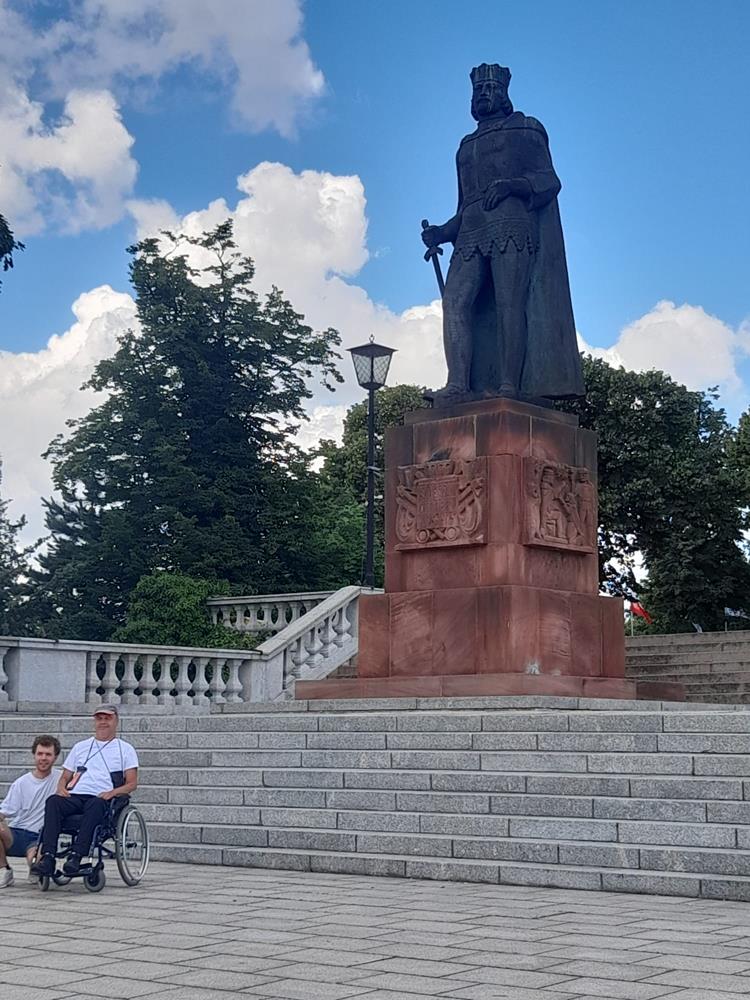
Gniezno is where the history of Poland began. It was here that the first Polish kings were crowned, making this historic city a destination I simply had to visit sooner or later. The perfect opportunity came during my stay in Poznań, as Poland's first capital is located just 55 km (34 miles) from the capital of the Greater Poland region.
Is Gniezno wheelchair accessible? After spending several hours exploring the city, I can say that although many places are accessible, there is still plenty of room for improvement. I was particularly disappointed by the accessibility of Gniezno Cathedral and its immediate surroundings. On the other hand, I have absolutely no complaints about the Museum of the Origins of the Polish State, which offers excellent accessibility for visitors with disabilities.
Visiting Gniezno – Poland's First Capital in a Wheelchair
Gniezno is one of the most important cities in Polish history. Anyone interested in the country's heritage should visit this remarkable place at least once. The city is relatively compact, meaning that most of its major attractions are located within easy walking or rolling distance of one another.
Walking through the streets of Gniezno, you can admire beautiful historic townhouses, the charming Market Square, and numerous references to the legendary founders of Poland—Lech, Czech, and Rus. Sculptures of rabbits and eagles, together with many historical details scattered throughout the city, make even a simple stroll an enjoyable experience.
Wheelchair users should be aware that parts of the historic city centre feature cobblestone streets, some of which can be challenging to navigate. While these surfaces do not prevent sightseeing, they can require a bit more effort in certain areas.
Museum of the Origins of the Polish State – Discover Poland's History Through Modern Exhibitions
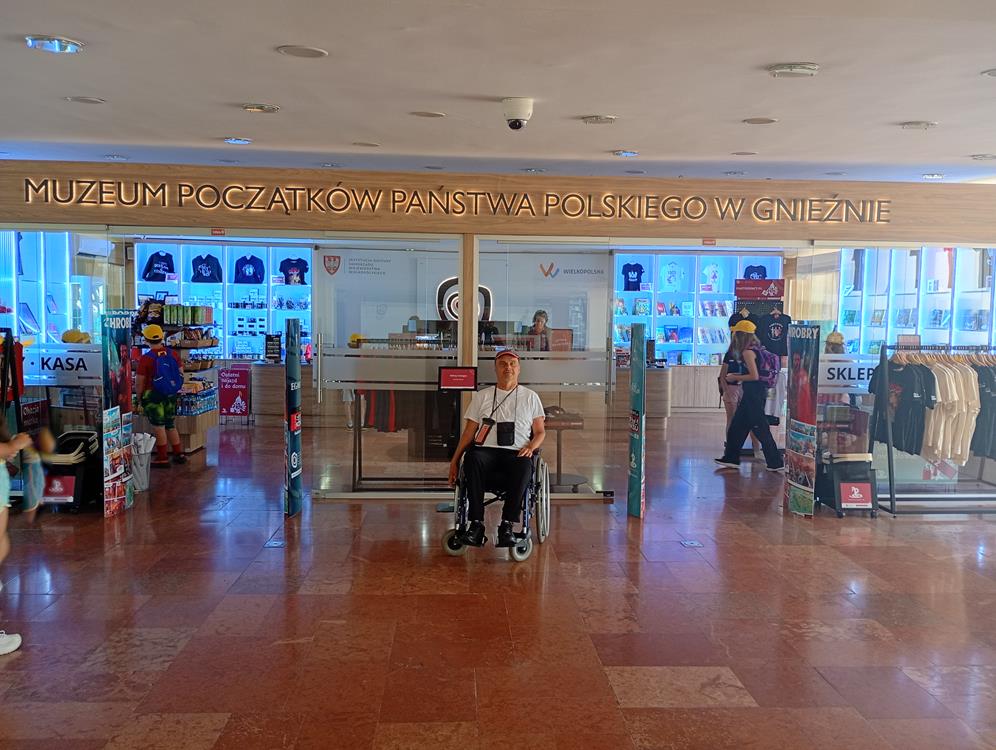
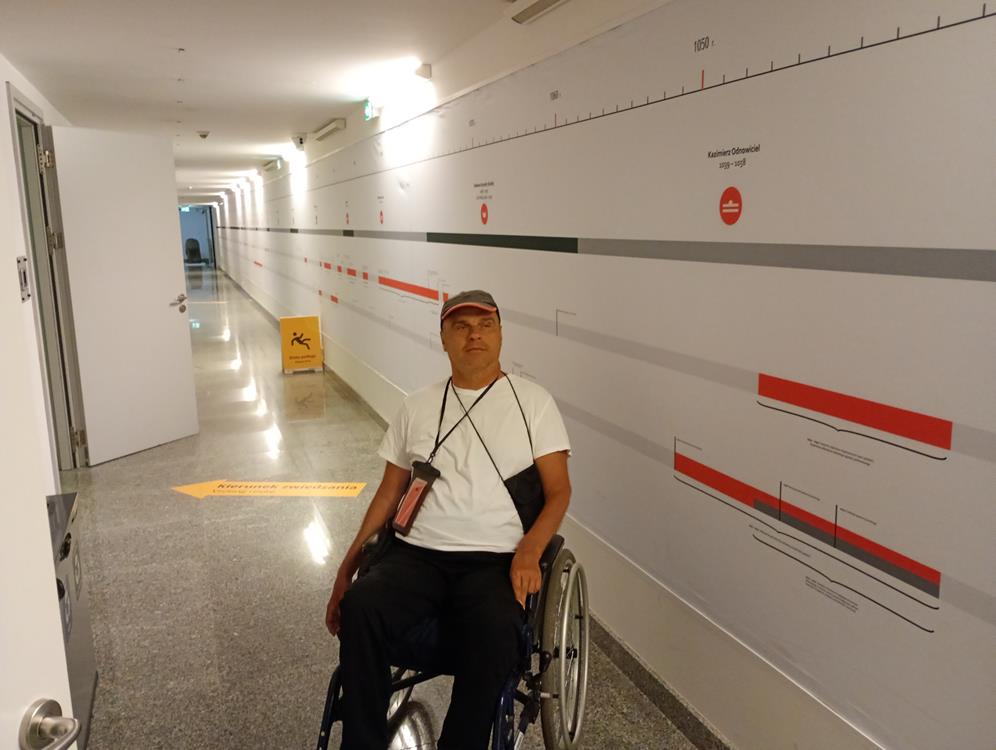
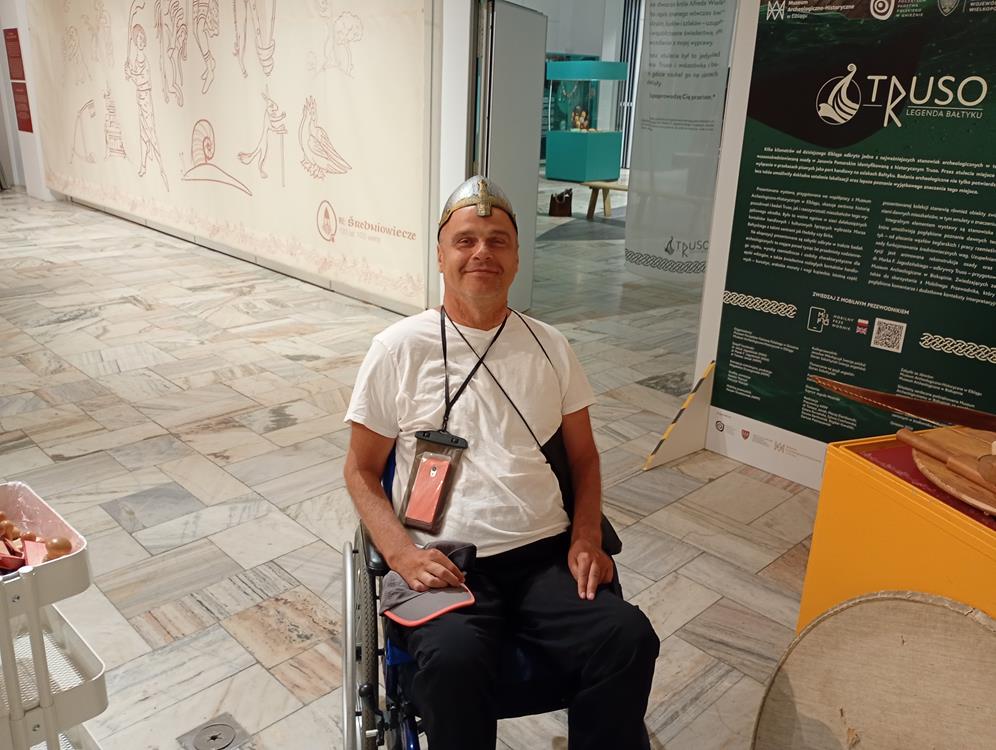
The first stop during my visit to Gniezno was the Museum of the Origins of the Polish State. From the moment you enter, it is clear that this is a modern museum designed with accessibility in mind, including visitors who use wheelchairs.
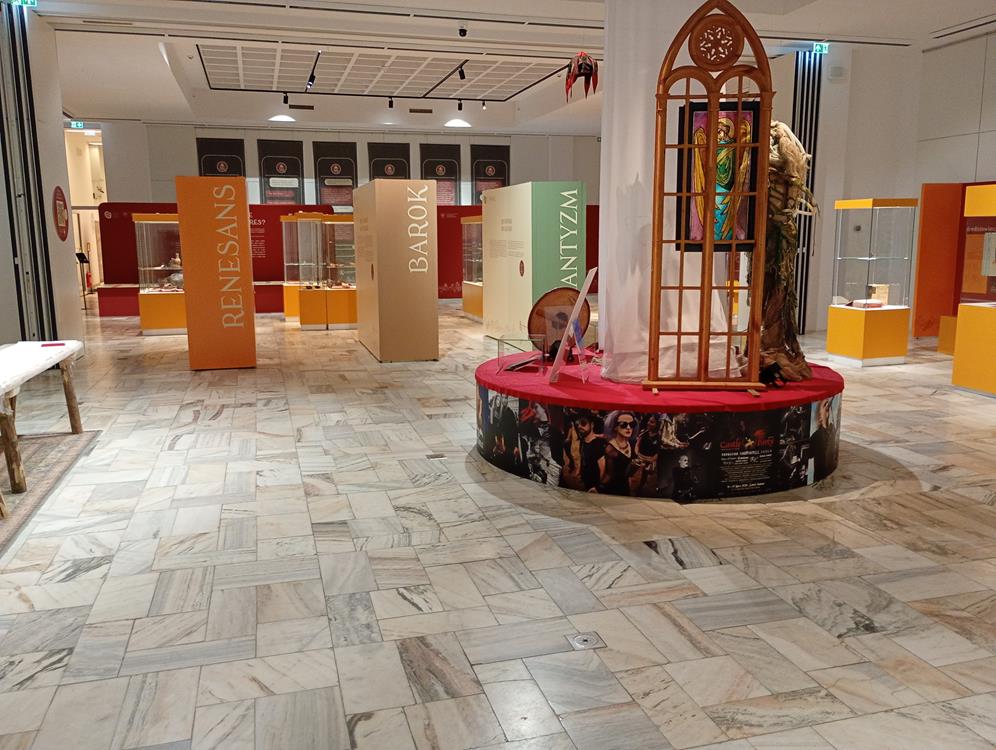
One of its biggest advantages is the ease of access. A spacious parking area with several designated accessible parking spaces is located directly in front of the museum. The entrance is fully adapted, and moving between the different exhibition areas is effortless. The wide exhibition halls and corridors provide plenty of room to manoeuvre a wheelchair comfortably, while the well-designed layout allows visitors to explore every exhibition without obstacles. Thanks to these thoughtful accessibility features, I was able to focus on what mattered most—discovering the fascinating story of the beginnings of the Polish nation.
What Can You See at the Museum of the Origins of the Polish State?
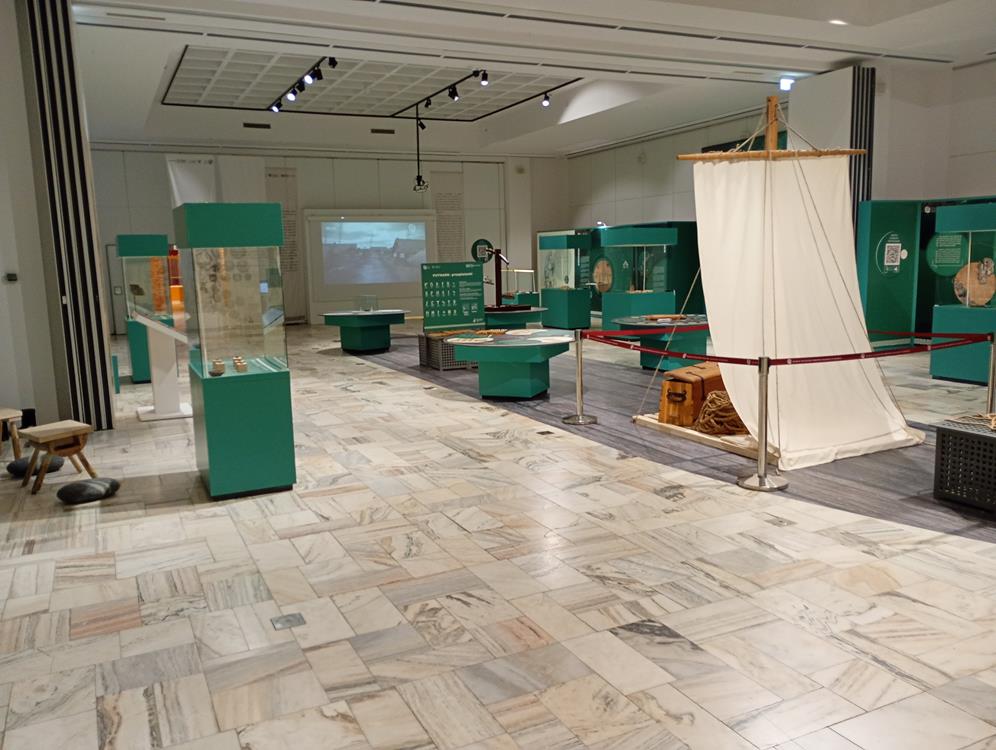
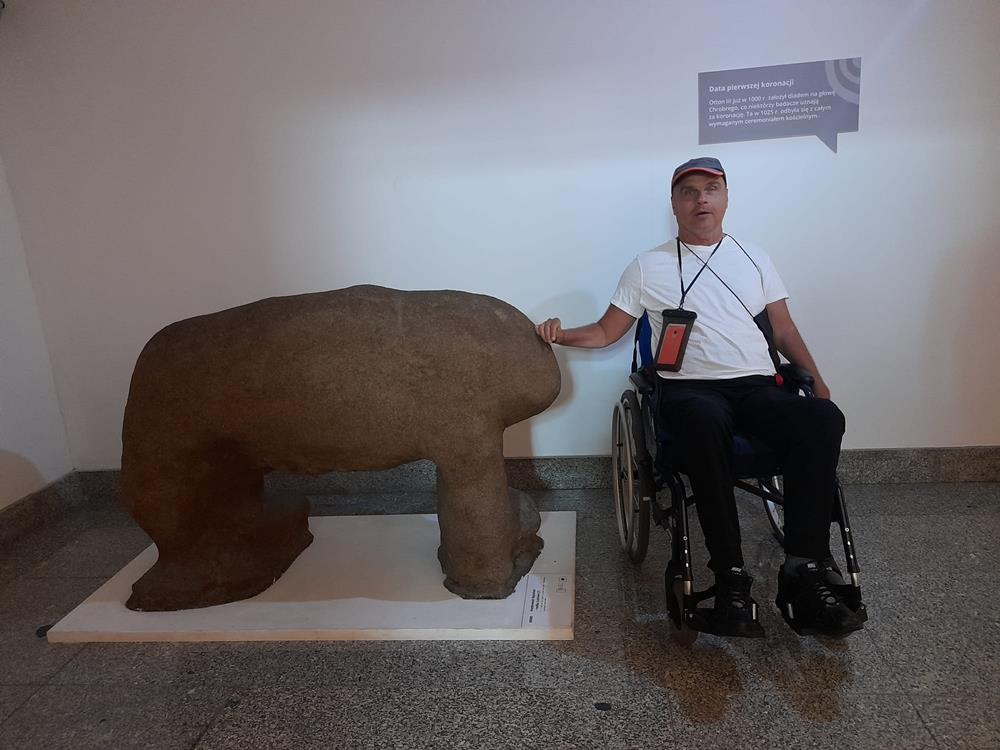
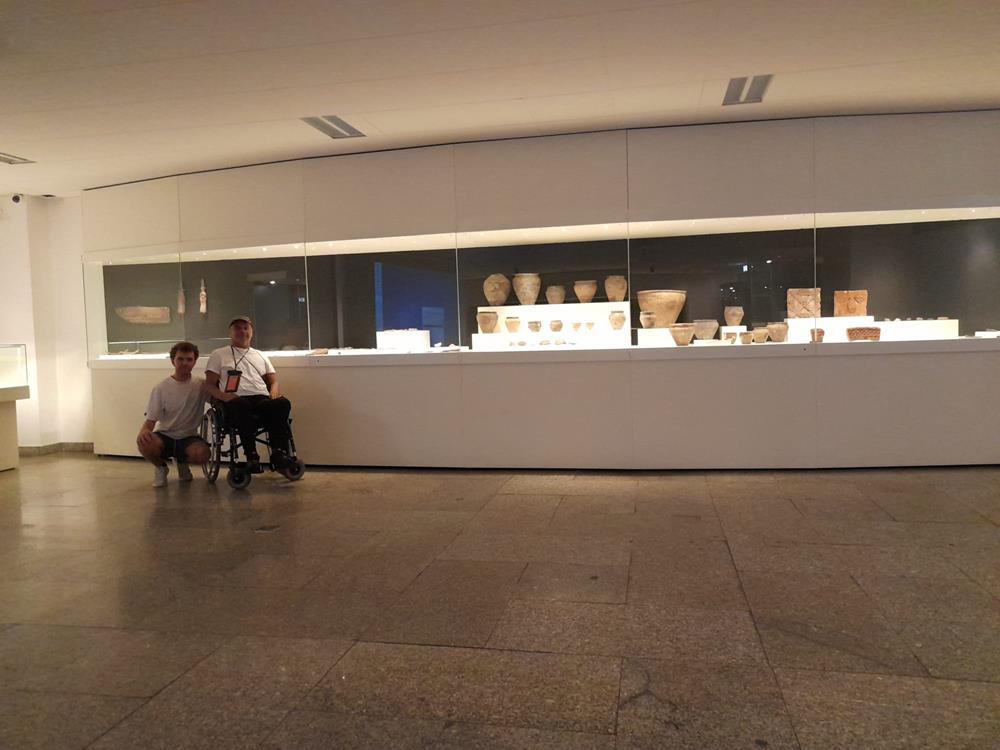
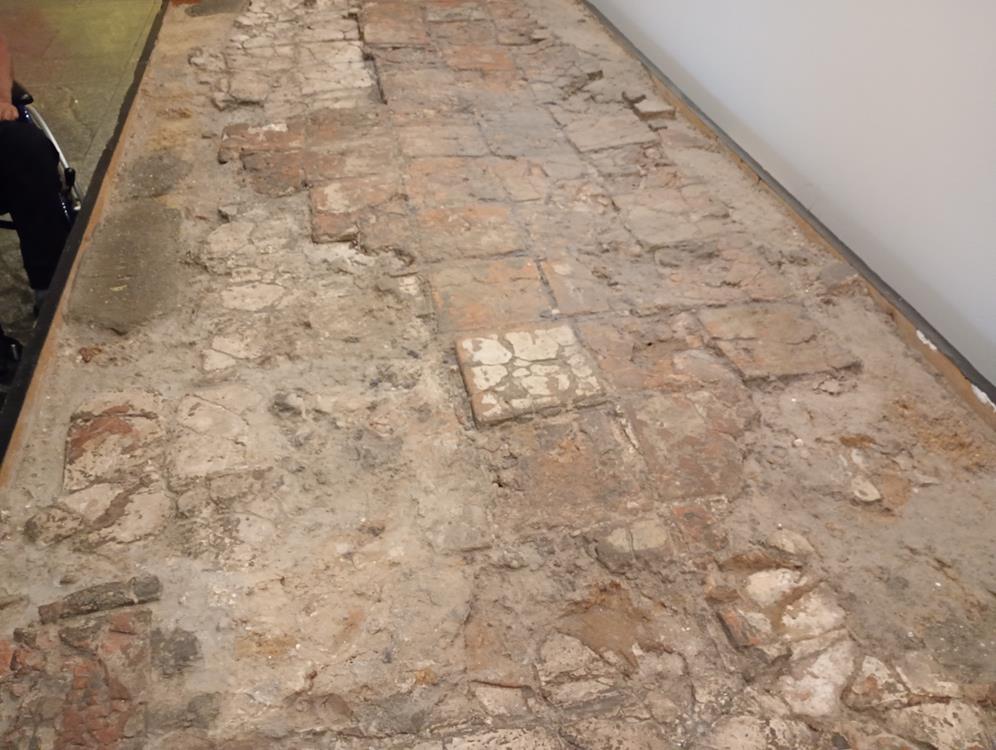
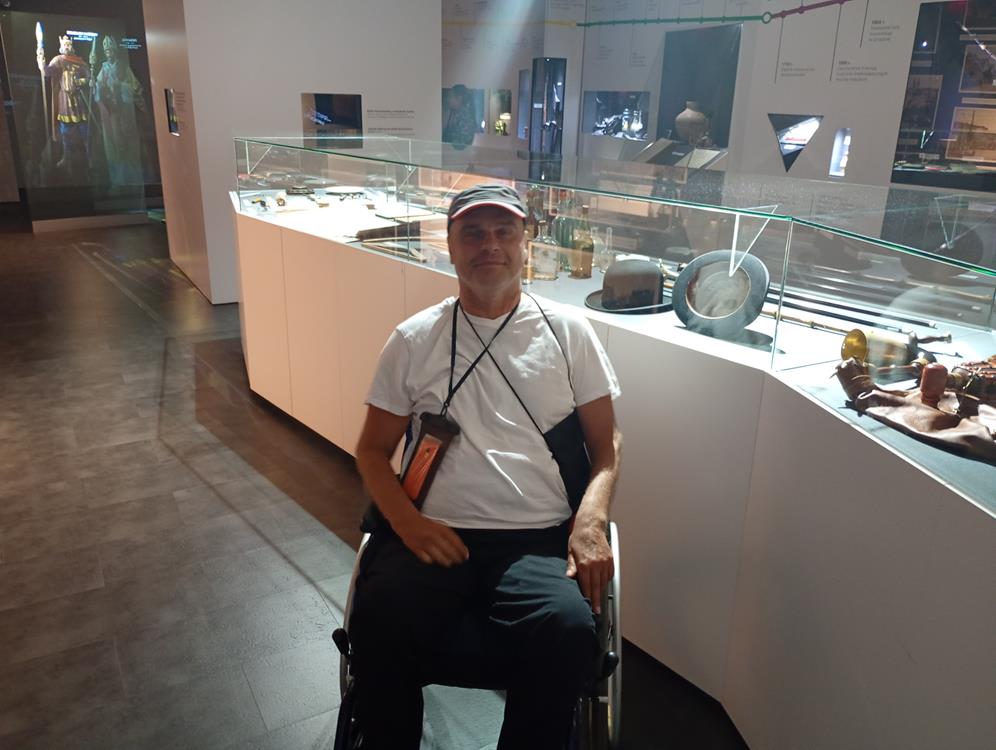
Most of the exhibitions follow a traditional museum layout, with rows of display cases showcasing historical artefacts. At first, I was slightly disappointed because many of the exhibits were replicas. Fortunately, the further I explored, the more authentic treasures I discovered, including numerous artefacts dating back around a thousand years.
During your visit, you can learn about:
- the daily life of the first Piast rulers,
- the development of the early Polish state,
- how the first fortified settlements were built,
- why Gniezno played such an important role in Polish history,
- how the first royal coronations took place.
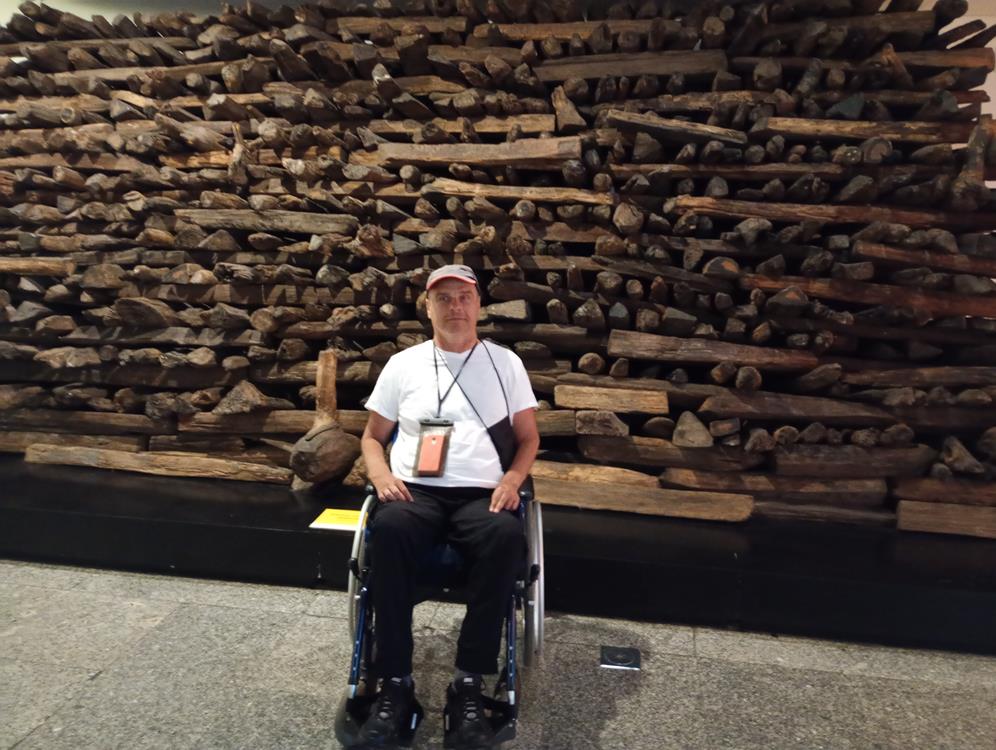
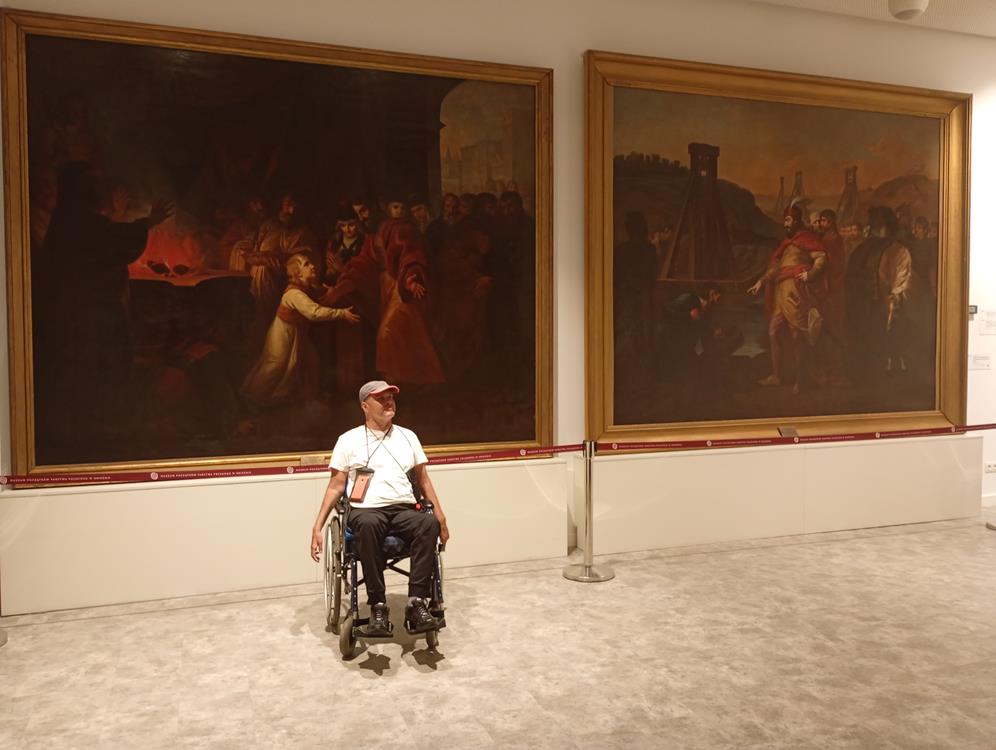
One of my favourite exhibits was the reconstructed defensive wall built using original timber that is around a thousand years old. I was also impressed by the collection of large historical paintings representing different periods of Polish history. The museum presents its exhibitions in a way that is engaging and easy to understand for both adults and children.
Gniezno Cathedral – The Heart of Polish History
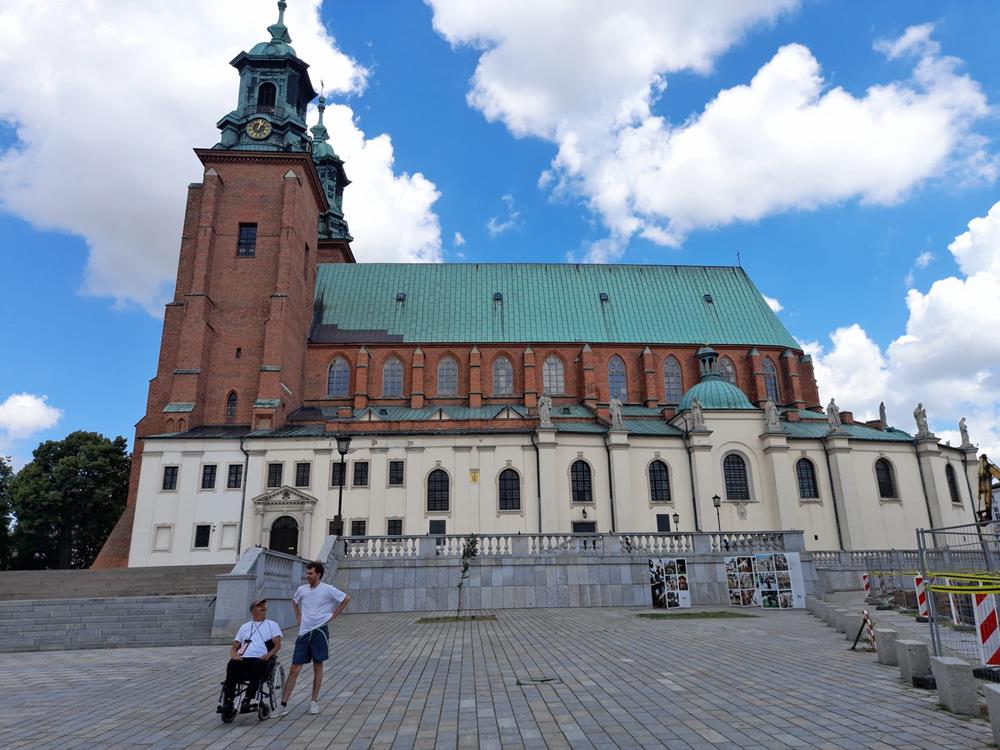
The second place I simply couldn't miss during my visit to Gniezno was the magnificent Gniezno Cathedral.
Its towering twin spires dominate the city skyline and are visible from afar. This is where the first Kings of Poland were crowned, and for centuries the cathedral has remained one of the most important symbols of Polish national identity. For anyone interested in Polish history, visiting this landmark is an absolute must.
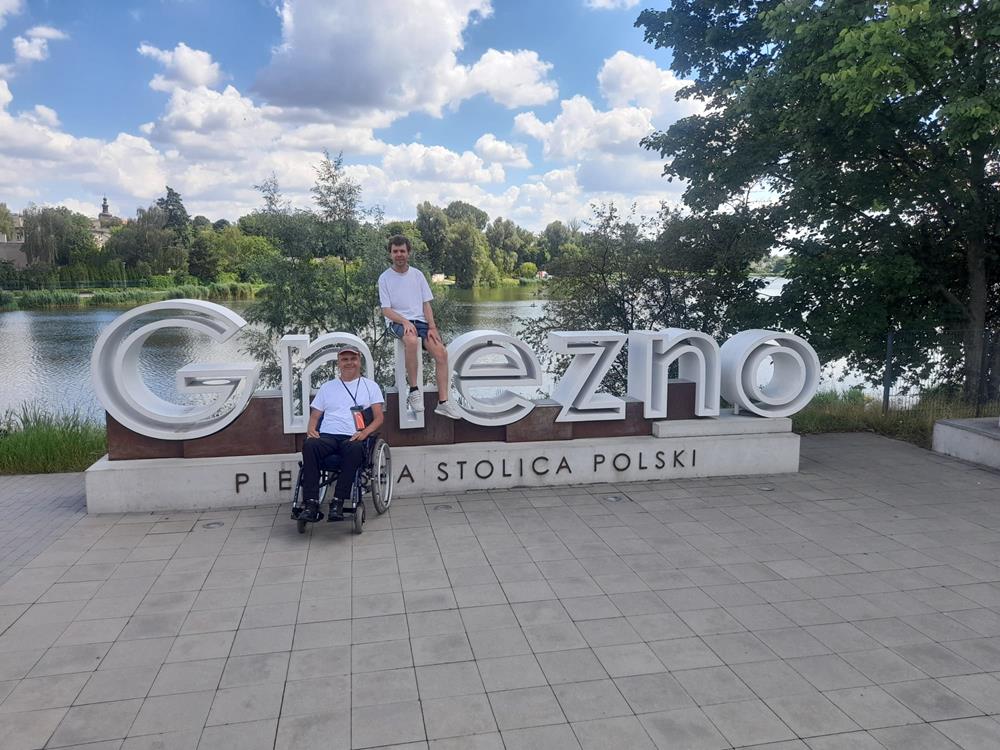
The distance between the Museum of the Origins of the Polish State and Gniezno Cathedral is approximately 800 metres (0.5 miles). You can reach the cathedral either by following the scenic path through the park surrounding the lake or by walking along the main road, where you'll also find the famous "Gniezno" city sign. If you choose the park route, be prepared for several steep hills along the way.
Reaching the cathedral itself in a wheelchair usually requires assistance, as it stands on Lech Hill and the approach involves a fairly steep uphill climb.
Is Gniezno Cathedral Wheelchair Accessible?
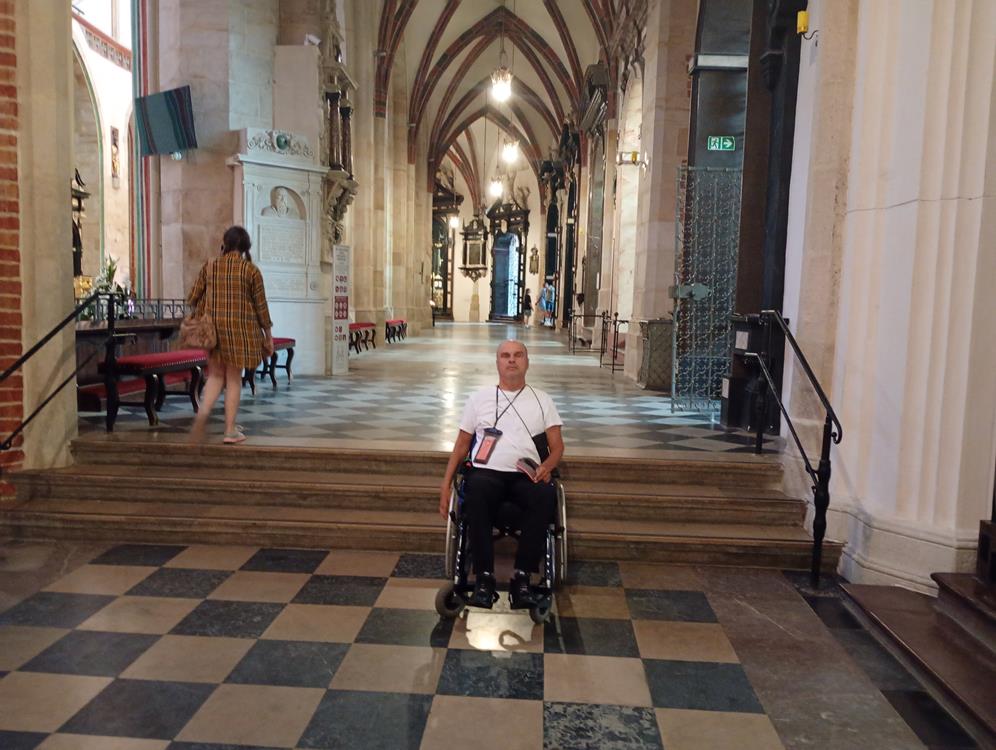
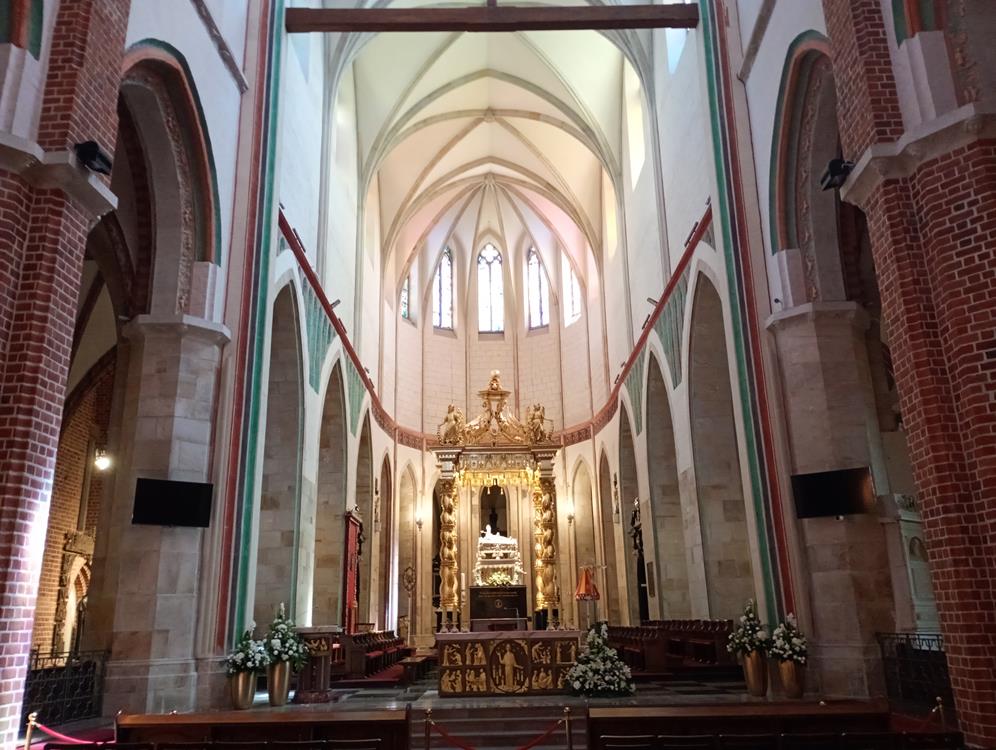
The official name of the cathedral is the Primatial Basilica of the Sanctuary of St. Adalbert in Gniezno. Unfortunately, accessibility for wheelchair users is limited. Although there is a ramp leading to one of the entrances, a flight of steps located halfway through the cathedral prevents wheelchair users from approaching the magnificent main altar. In my opinion, a small ramp would hardly affect the historic appearance of the building. However, I was told by the staff that the heritage conservation authorities have repeatedly refused permission despite requests from numerous disability organisations. Even with these limitations, visitors can still admire the impressive Gothic interior, soaring vaulted ceilings, beautiful chapels, and remarkable altars.
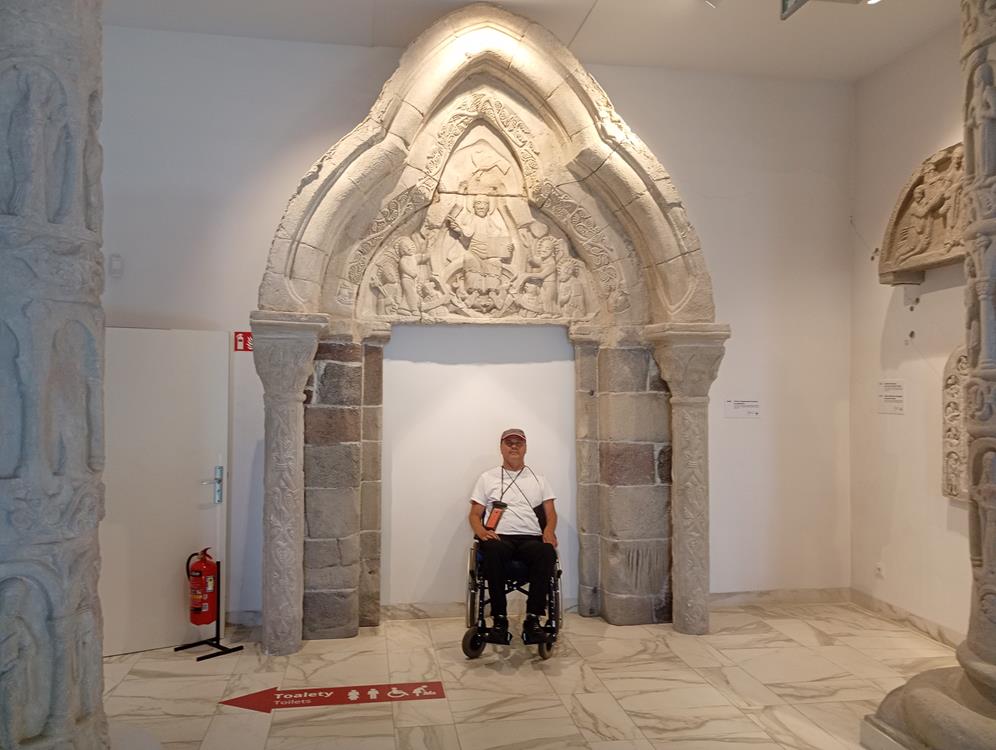
The biggest surprise came when I wanted to buy a ticket for the cathedral's tourist route. The ticket office informed me that there was little point in purchasing one because virtually all attractions on the route were inaccessible to wheelchair users. I had expected that the underground chambers and viewing towers would involve stairs due to the historic nature of the building, but I was genuinely disappointed to learn that I supposedly wouldn't be able to see the famous Gniezno Doors. Later, however, a member of the cathedral's lay staff explained that wheelchair users who purchase a ticket can be admitted through a separate entrance leading directly to the room where the cathedral's greatest treasure is displayed. In the end, I decided not to buy a ticket just for this single attraction, especially since I had seen an excellent replica of the Gniezno Doors only a couple of hours earlier at the Museum of the Origins of the Polish State.
What Are the Gniezno Doors?
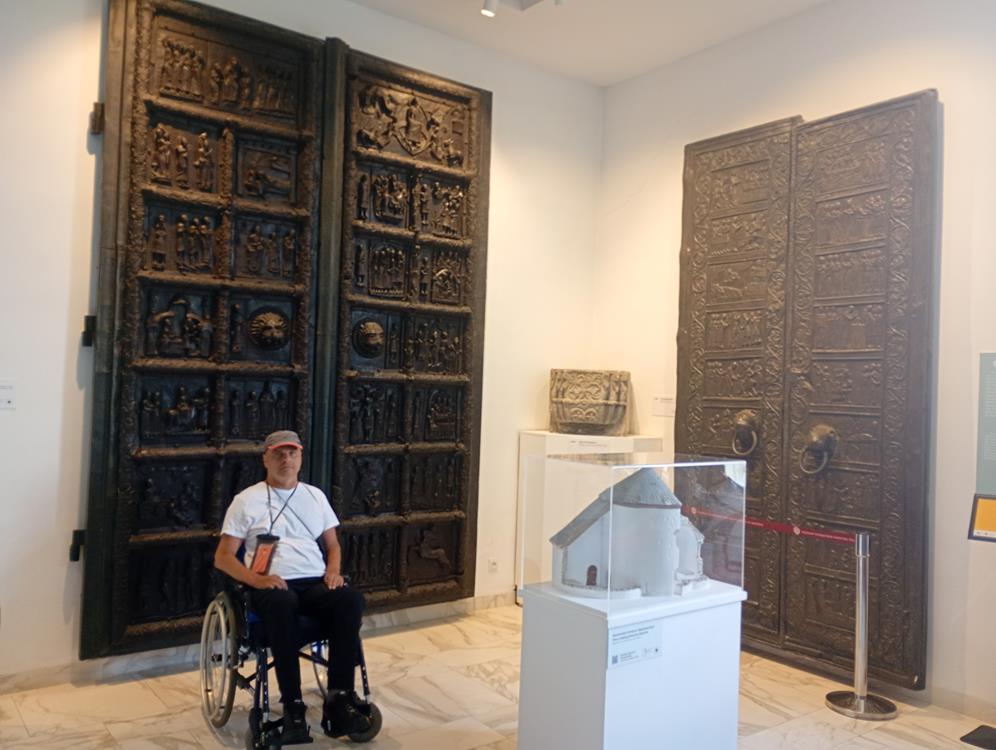
The cathedral's greatest treasure is the famous Gniezno Doors, which depict the life of St. Adalbert. Each of the eighteen bronze panels was crafted with extraordinary precision and is filled with intricate medieval details. Even if you've seen photographs before, it's only when standing in front of them—or even a faithful replica—that you can truly appreciate the remarkable craftsmanship of the artists who created them. The Gniezno Doors are considered one of the finest surviving examples of Romanesque art in Europe.
The Atmosphere of Gniezno
What I remember most about my visit—apart from the impressive cathedral, its magnificent altar, and the monument to Poland's first king—is the city's wonderfully peaceful atmosphere. Unlike many of Poland's most popular tourist destinations, Gniezno isn't overcrowded. You can explore the streets at your own pace, stop for a coffee, or simply relax in the Market Square. For wheelchair users, this slower pace is a significant advantage. Fewer pedestrians make it much easier to move around the historic centre and enjoy sightseeing comfortably.
Is Gniezno Worth Visiting for Wheelchair Users?
In my opinion, absolutely.
The Museum of the Origins of the Polish State impressed me with its modern design and excellent accessibility. It presents the history of Poland in a fascinating, engaging, and wheelchair-friendly way.
Gniezno Cathedral, meanwhile, allows visitors to experience the unique atmosphere of Poland's first capital. Although the historic nature of the building creates significant accessibility challenges, it is still well worth visiting to admire its magnificent altar and breathtaking interior.
Practical Tips for Wheelchair Users Visiting Gniezno
If you're planning a trip to Gniezno and travel in a wheelchair, here are a few helpful tips:
- check the opening hours of tourist attractions in advance to avoid disappointment;
- park as close to the city centre as possible, for example near the Museum of the Origins of the Polish State;
- be prepared for cobblestone streets and several steep sections;
- allow plenty of time to explore the city at a relaxed pace;
- if you use a manual wheelchair, having someone accompany you can be very helpful, especially when travelling up to the cathedral.
Final Thoughts on Visiting Gniezno
Overall, I really enjoyed my visit to Gniezno. The city impressed me with its rich history, peaceful atmosphere, and remarkable landmarks that every visitor to Poland should experience at least once. The highlight of my trip was undoubtedly the monumental Gniezno Cathedral and its beautiful main altar. However, I was disappointed by the lack of clear and consistent information regarding which parts of the cathedral are actually accessible to wheelchair users.
If you're looking for a great destination for a day trip or weekend getaway, have an interest in Polish history, and travel in a wheelchair, Gniezno definitely deserves a place on your travel list. It is a city where Poland's past comes alive, offering an experience that can be both fascinating and, for the most part, accessible.