
 PL
 DE
Have Brazilian Scientists Found a Way to Regenerate the Spinal Cord? Polylaminin Offers Hope to People with Paraplegia and Tetraplegia

Could it one day be possible to regain lost abilities after years of living with paralysis? This is a question that people with spinal cord injuries, their families, and scientists searching for effective treatments have been asking for decades. One of the most interesting areas of research involves polylaminin – an experimental substance developed by a Brazilian research team led by Professor Tatiana Coelho-Sampaio. Preliminary results from studies involving humans have attracted considerable attention because improvements in neurological function have been observed in some patients. Are we really getting closer to a breakthrough in the treatment of spinal cord injuries?
Spinal Cord Injury – Why Is It So Difficult to Repair?
The spinal cord is one of the most important structures of the human nervous system. It runs inside the spinal column and serves as the main communication pathway between the brain and the rest of the body. It enables us to move our limbs, feel touch, temperature and pain, and control many processes taking place in our bodies.
A severe spinal cord injury can interrupt or damage the nerve pathways running through it. This can result in the loss of some or all motor and sensory functions below the level of injury. Depending on the location and extent of the damage, the injury may lead to paraplegia, involving paralysis of the lower limbs, or tetraplegia, which also affects the upper limbs.
The problem is that nerve cells in the central nervous system have a very limited ability to regenerate spontaneously. Following an injury, not only are some nerve fibres directly destroyed, but secondary processes also develop that cause further tissue damage. Inflammation occurs, cells die, blood supply becomes disrupted, and a glial scar forms, making it more difficult for axons to regenerate.
Axons are long extensions of nerve cells that transmit electrical impulses. If they are severed, communication between the brain and certain parts of the body can become severely impaired. This is why medicine has been searching for decades for a way not only to protect the site of injury but also to create conditions that would allow damaged nerve connections to be rebuilt.
Professor Tatiana Coelho-Sampaio – The Brazilian Scientist Who Chose to Focus on Laminin
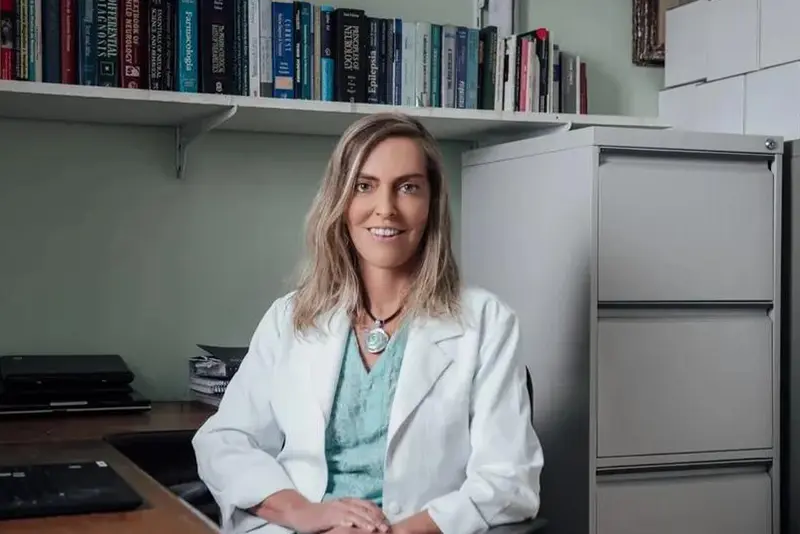
One of the researchers involved in the search for new ways to treat nervous system injuries is Professor Tatiana Coelho-Sampaio, a Brazilian biologist affiliated with the Federal University of Rio de Janeiro (UFRJ). Her research interests include the extracellular matrix, a structure surrounding cells that influences their functioning, movement and growth.
Laminin has attracted particular attention from the researcher. It is a naturally occurring protein in the human body and an important component of the basement membrane. It acts as a kind of scaffold for cells and also plays a role in regulating their behaviour. Laminin also plays an important role in the development of the nervous system. It can influence the growth of neuronal extensions and support processes involved in the formation of nerve connections.
Research conducted by the Brazilian team led to the development of polylaminin. It is not simply ordinary laminin, but a specially prepared form of this protein whose properties are intended to promote regenerative processes. The researchers aim to create an environment at the site of injury that is more favourable for the regrowth of nerve fibres. This mechanism forms the basis of the entire project.
How Does Polylaminin Work and Why Do Scientists Have Such High Hopes for It?
Put simply, polylaminin is intended to act as a biological scaffold that may help nerve cells grow and rebuild connections. In a healthy organism, laminin contributes to the creation of an environment that supports cell development and function. Brazilian scientists decided to use these properties to develop a substance that could help repair the damaged nervous system.
During the polymerisation process, laminin molecules join together to form larger structures. This produces polylaminin, whose biological properties may support the growth of neuronal extensions. In the case of spinal cord injuries, the possibility of axonal regrowth is particularly important. If these fibres could reconnect with the appropriate neural structures, this could potentially make it possible to recover some of the functions lost as a result of the injury.
The goal is therefore not simply to stimulate cells to grow, but to create conditions in which regenerated nerve fibres can once again transmit signals. It should be emphasised, however, that the exact mechanism by which polylaminin works in the treatment of spinal cord injuries has not yet been fully understood. Scientists are still investigating how the substance interacts with nerve cells and the structures located at the site of injury.
From Animal Experiments to the First Human Studies
Before polylaminin was used in humans, a number of laboratory experiments and animal studies were conducted. The results of experiments involving rats were encouraging. Scientists observed improvements in motor function after administering the substance at the site of spinal cord injury. These observations provided the basis for attempts to use polylaminin in the treatment of humans.
The next step was to conduct the first pilot study involving patients with severe spinal cord injuries. The study began in December 2016. It included eight people with complete spinal cord injuries classified as AIS A. The patients had injuries at different levels, ranging from the cervical region at C4 to the thoracic region at T12.
Importantly, the group included both people with tetraplegia and people with paraplegia. Polylaminin was administered directly into the spinal cord near the site of injury. The procedure was performed in connection with neurosurgery. On average, only 2.3 days had passed between the injury and the administration of the substance.
Each patient received a single dose of 1 microgram per kilogram of body weight. They were then monitored for 12 months. The primary objective of the study was to assess the safety and feasibility of using this method in humans. Researchers also monitored neurological changes that could indicate potential regenerative effects.
Results of the First Study – Six Patients Experienced Neurological Improvement
The findings concerning changes in the participants' neurological status attracted the greatest attention. Six out of the eight patients experienced an improvement of at least two grades on the AIS scale. Five patients reached AIS C, while one reached AIS D. In the case of one participant who achieved AIS C, the improvement was recorded before the patient's death during the follow-up period.
These results certainly deserve attention, particularly because the study involved people initially classified as AIS A, indicating a neurologically complete spinal cord injury. It is worth explaining what the individual categories actually mean.
The AIS (ASIA Impairment Scale) is an internationally recognised tool used to assess the severity of spinal cord injuries.
- AIS A – Neurologically complete injury. No sensory or motor function is preserved in the lowest sacral segments, S4–S5.
- AIS B – Sensory function is preserved below the level of injury, but there is no qualifying motor function.
- AIS C – Motor function is preserved below the level of injury, but most of the key muscles have a strength score below 3 on the Lovett scale.
- AIS D – Motor function is better preserved, with at least half of the key muscles below the level of injury having a strength score of at least 3.
- AIS E – Normal motor and sensory function on neurological examination.
A change from AIS A to AIS C or D therefore represents a significant neurological improvement. However, it does not automatically mean that a patient has regained full physical ability, the capacity to walk independently, or their previous quality of life. In three cases, the improvements observed during neurological examinations were also accompanied by favourable changes in evoked potential tests. These tests help assess the transmission of signals along nerve pathways.
Unfortunately, three participants died during the 12-month follow-up period. Their deaths were reviewed by the Brazilian ethics committee and an independent consultant. They were not considered to be related to the use of polylaminin. The results of the study were published on 4 August 2026 in the scientific journal "Spinal Cord", published by Nature.
This is an important milestone for the project because data from the first human trials have been presented in a peer-reviewed scientific publication rather than appearing only in media reports. At the same time, the authors clearly stated that the small number of participants and the lack of a control group mean that the study cannot establish the effectiveness of polylaminin.
Why Don't These Results Yet Represent a Breakthrough in the Treatment of Paraplegia and Tetraplegia?
There is one very important issue worth considering here. People with complete spinal cord injuries have a low chance of spontaneously regaining significant motor function, but that possibility is not zero. Natural neurological changes may occur during the first months after an injury. Surgical treatment, rehabilitation and individual differences between patients can also have an influence.
Therefore, even if six participants in the study experienced improvement, it cannot be conclusively established that polylaminin was responsible. To prove this, further studies involving larger numbers of participants, an appropriately selected control group and clearly defined criteria for assessing treatment effectiveness are needed.
This is precisely the difference between an encouraging experimental result and a proven treatment method. It is also important to remember that the first study involved patients who received polylaminin just a few days after their injuries. These were not people who had been living with tetraplegia or paraplegia for ten, twenty or thirty years. This is an extremely important limitation to bear in mind when reading reports about Brazilian research.
2026 – Anvisa Authorises the Next Stage of Research

In January 2026, Brazil's regulatory agency Anvisa (Agência Nacional de Vigilância Sanitária), responsible for overseeing medicines and medical products, authorised the start of a Phase I clinical trial involving polylaminin. This represents another important step in the development of this technology.
Brazilian pharmaceutical company Cristália is also involved in the research, working with scientists from the Federal University of Rio de Janeiro on the development of the substance. The first phase of clinical research is planned to involve five patients. However, the eligibility criteria are very specific.
Participants must be between 18 and 72 years old and must have sustained a complete traumatic spinal cord injury in the thoracic region, between vertebrae T2 and T10. No more than 72 hours may have passed since the injury. Patients must also have an indication for surgical spinal cord decompression.
Polylaminin is to be administered as a single dose directly into the area surrounding the spinal cord injury during surgery. The study is planned to take place at two medical centres in São Paulo: Hospital das Clínicas and Santa Casa de Misericórdia. Following the procedure, participants are expected to undergo rehabilitation and remain under observation for six months.
The start of this phase of research was announced for 24 September 2026. Importantly, the purpose of Phase I is not yet to prove that polylaminin restores physical function. Its primary objective is to assess the safety of administering the substance and monitor any potential adverse effects. Only after satisfactory results have been obtained will it be possible to move on to subsequent stages.
Three Phases of Clinical Trials – A Long Road from Experiment to Treatment
Introducing a new substance for widespread medical use requires several stages of clinical research. In the case of polylaminin, this process is only just beginning.
Phase I – Safety
During the first phase, researchers primarily assess whether administering the substance to humans is safe. They monitor the body's response, possible complications and adverse effects.
Phase II – Effectiveness and Treatment Assessment
If the first phase is successful, further studies involving a larger group of patients may be conducted. Researchers will be able to assess more accurately whether polylaminin actually produces neurological benefits, how significant these benefits are and which patients may experience them.
Phase III – Confirmation of Effectiveness
At this stage, studies involve an even larger number of participants. The results make it possible to compare the new treatment with existing medical approaches and assess its effectiveness and safety in a broader population. Only after the required stages have been completed and the appropriate regulatory approval has been obtained could the substance become available for widespread medical use.
There is currently no reliable date for when polylaminin might become a standard treatment method.
Controversies Surrounding Polylaminin and Restrictions on Experimental Use
The considerable interest in polylaminin has led to requests in Brazil for the substance to be made available to patients outside standard clinical trials. So-called compassionate use allows, under certain circumstances, an experimental substance to be administered to people with serious medical conditions who have no satisfactory treatment options.
However, such use does not replace clinical trials. When a patient receives a substance outside a controlled research protocol, it is difficult to assess reliably whether any improvement is actually the result of its effects. In October 2026, Anvisa decided to tighten the criteria for access to polylaminin under this procedure. According to reports published by the Brazilian newspaper "Folha de S.Paulo", by that time there had been 119 reported uses of the substance under compassionate use and nine patient deaths.
The agency indicated that safety needed to be reassessed, particularly given the uncertainty surrounding the relationship between the administration of the substance and the reported events. The new restrictions brought the eligibility criteria closer to those planned for the first phase of clinical trials. They include, among other things, the time elapsed since the injury and the location of the damage.
The decision sparked disagreement between some members of the research community and the Brazilian regulatory agency. Professor Tatiana Coelho-Sampaio expressed criticism of the restrictions on access, while Anvisa emphasised the need to maintain appropriate safety standards. This situation illustrates how difficult it is to strike a balance between patients' hopes of regaining their abilities and the obligation to protect their health.
The Most Important Question: Could Polylaminin Help People Living with Long-Term Paraplegia and Tetraplegia?
The preliminary results of Brazilian research may offer hope, but it is important to be clear: there is currently no scientific evidence confirming that polylaminin can restore physical function in people who sustained spinal cord injuries many years ago. The pilot study conducted so far involved patients with very recent injuries. On average, the substance was administered just over two days after the accident.
During this period, intensive biological processes take place at the site of injury. Inflammation develops, some cells die, blood supply changes and scar tissue begins to form. The possibility of influencing these processes may be very different from the situation in a spinal cord that has remained damaged for ten, twenty or thirty years. In chronic spinal cord injuries, the situation is much more complicated. The structure of the tissue at the injury site changes, permanent alterations occur in the nerve pathways, and secondary changes develop in the brain and muscles.
Even if researchers managed to stimulate the growth of new nerve fibres, it would still be necessary to establish whether these fibres could form the correct connections with the appropriate structures of the nervous system. Rebuilding such connections does not automatically guarantee the recovery of muscle control, sensation or autonomic functions. This is why future studies involving people with chronic spinal cord injuries will be particularly important. For now, however, it remains unknown whether polylaminin could be used in such cases.
What Would Need to Happen for Polylaminin to Help People with Spinal Cord Injuries?
Researchers still face many challenges. First, they need to confirm that polylaminin actually promotes the regeneration of nerve connections and that the improvements observed are not simply the result of natural processes occurring after an injury.
Second, it will be necessary to determine whether this treatment could be used not only during the first days after an accident, but also months or years later.
Third, researchers must establish whether regenerated nerve connections can lead to the recovery of specific functions. For people with tetraplegia, regaining even some hand function would be particularly important. This could include the ability to grasp objects, perform basic everyday activities independently or improve trunk control.
Autonomic functions would be equally important, including bladder and bowel control, blood pressure regulation and respiratory function. It is worth remembering that even partial improvement in these areas could make an enormous difference to the everyday lives of people with spinal cord injuries. However, this would not automatically mean a complete recovery.
Could Polylaminin Become a Breakthrough in the Treatment of Spinal Cord Injuries?
The story of polylaminin is one of the more interesting examples of the development of modern research into nervous system regeneration. For many years, scientists have focused on limiting the consequences of spinal cord injuries and preventing further damage to nervous tissue. Increasing attention is now being paid to the possibility of rebuilding interrupted nerve connections. Research led by Professor Tatiana Coelho-Sampaio is part of this emerging direction.
The results of the first human study are interesting and justify further research. However, they do not provide grounds for announcing that an effective cure for paraplegia or tetraplegia has been discovered. The results of subsequent clinical trial phases will be particularly important, as will determining whether the potential benefits can be reproduced in a larger group of patients.
For people who have been living with spinal cord injuries for many years, there is another unanswered question: will it eventually be possible to use this technology in cases of old, established injuries? Brazilian researchers do not yet have an answer to this question.
Hope Without False Promises
For decades, people with spinal cord injuries have been following developments in stem cell research, electrical stimulation, exoskeletons, gene therapy and other technologies designed to support nervous system regeneration. Many of these technologies have produced interesting results, but the journey from an experiment to a widely available treatment has proved to be very long.
Polylaminin provides another reason to follow scientific progress with interest. It is particularly significant that the Brazilian team has moved beyond laboratory experiments to initial clinical studies involving humans, and that the pilot study results have been published in a scientific journal. However, polylaminin should not be regarded as an established treatment, nor should patients seek ways of obtaining the substance independently.
The real significance of this research will only become clear once scientists demonstrate that the method is safe and can genuinely restore lost neurological functions. Perhaps in the coming years we will learn whether polylaminin will become one of the important elements in the treatment of spinal cord injuries. Perhaps this research will also lead to the development of methods that could eventually help people who have been living with tetraplegia and paraplegia for many years.
For now, all we can do is follow the results of further experiments and wait for reliable answers from scientists. Because for millions of people living with spinal cord injuries, even partially regaining lost functions could mean an enormous improvement in everyday life.
Scientific Sources and Further Reading:
- Scientific publication: Intramedullary injection of polymerized laminin in acute traumatic spinal cord injury: a first-in-human pilot study, journal "Spinal Cord", 4 August 2026.
- Anvisa – official information on the authorisation of the polylaminin clinical trial, 5 January 2026.
- ReBEC – Brazilian Clinical Trials Registry, study RBR-9dfvgpm.
- Agência Brasil – information about the start of Phase I clinical trials, September 2026.
- Folha de S.Paulo – reports on restrictions concerning compassionate use of polylaminin, October 2026.